
Skip to content
Zumu

NEMT and medical transportation

Will-call returns flood the line and your dispatchers lose the morning. Zumu answers every one.

Zumu is NEMT call center AI built for the way dispatch actually runs. It picks up will-call returns, trip confirmations and where-is-my-ride calls in seconds, checks the member against the systems you already use, and when a caller needs a person it bridges your dispatcher into the same call with the trip details already said out loud.

  • Answers every inbound call
  • Checks the member before anything else
  • Bridges your dispatcher into the same call
  • English and Spanish today
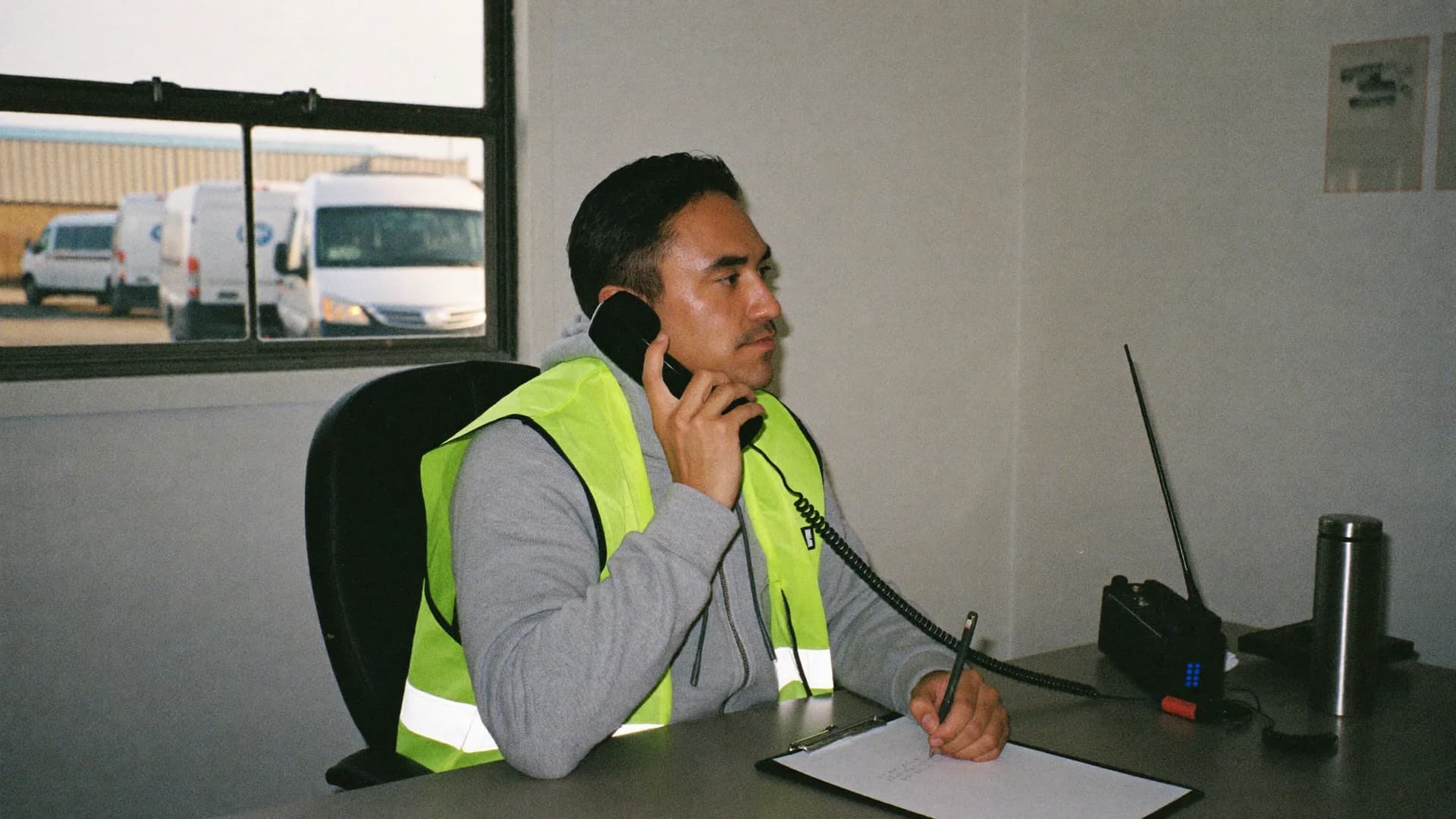
A dispatcher on a headset at a monitor, with a lot of vans parked behind the window at her back
The dispatch desk, an hour before the first run
A transfer bridges your dispatcher into the call the member is already on. The recording does not stop for the handoff.
In the room
The briefing the agent writes for your dispatcher before she accepts: who is calling, what they want, what is confirmed, what is still open.
4 to 6 sentences
Live today, on a multilingual speech stack that supports 10+ languages.
English and Spanish

Every figure on this page comes from a production deployment or from the way the product is built. Where there is no measured number, the page says so rather than estimating one.

The pressure

What an ordinary Tuesday costs your dispatch line

Three moments from a normal week in non-emergency medical transportation. None of them are unusual, which is exactly the problem.

  • 05:50Tuesday

    The shift starts and the board is already behind.

    Drivers call in about a route change, two facilities call about standing orders, and three members want to confirm a pickup that is ninety minutes out. Your first dispatcher of the day is on hold duty before she has opened the run sheet, and the calls she is not taking are the ones that turn into a missed trip.

  • 10:05Tuesday

    The member gives the same address for the third time.

    He gave it to the menu, then to the person who picked up, and now he is giving it to the dispatcher he was transferred to. Nothing he said survived the handoff. By the time the trip is on the board he has decided that calling you is something to avoid, which is how a scheduled ride quietly becomes a no-show.

  • 14:20Tuesday

    Clinic doors open and the will-call line fills at once.

    Appointments end in clusters, so return-ride calls arrive in clusters too. Every one of them is somebody already standing outside, and every minute they spend in your queue is a minute a driver spends idling somewhere else. Hold time here is not a satisfaction metric. It is a wheelchair van in the wrong parking lot.

None of this is a staffing gap you can hire your way out of. The calls arrive in waves, and the waves do not care how many dispatchers are rostered.

How Zumu answers it

Four things the platform does, and where each one lives

Each of these is a capability that exists in the product today, pointed at a specific part of a dispatch day. Follow any of them through to the page that owns the mechanism.

  • In-room escalation

    Your dispatcher joins the call the member is already on

    When a caller needs a person, Zumu does not push them back out to the carrier and disappear. The transfer bridges your dispatcher into the same room, so the recording keeps running, a supervisor can still listen to the human leg, and the member is never asked to start over.

    Warm transfer with hold music while the agent writes a briefing of 4 to 6 sentences covering caller intent, facts collected, pending actions and what was already verified. Your dispatcher accepts, declines or reports voicemail, with cold transfer, voicemail, retry and hang up as the fallbacks.

  • Knowledge graph

    The standing-order rules your team wrote, answered out loud

    Facility hours, standing-order policy, mileage rules, who may ride along. It is all written down somewhere, usually in a document two people have read. Point Zumu at those documents and the agent answers from them during the call instead of guessing.

    An eight-stage adversarial pipeline including a privacy-shield stage and a multi-model debate stage, written across a relational store, a graph store and a vector store, retrieved with hybrid dense and keyword ranking.

  • Live wallboard

    See the queue building while it is still building

    Your dispatch supervisor watches every active call on one board, listens in without the caller knowing, and sends the agent an instruction the caller never hears. By the time a call needs a person, she already knows which person.

    A live wallboard over the active-call table with sentiment rebroadcast every 10 seconds, hidden listen-in that also works on post-transfer rooms, whisper limited to one message every 5 seconds, and barge-in behind an organization-level consent acknowledgement for two-party-consent states.

  • Transfer QA

    The dispatcher leg gets graded too

    Most platforms stop measuring the second a human picks up. Zumu grades the handoff itself: why it happened, whether it resolved, and what would have made it shorter. Your dispatchers get coaching notes from real calls instead of a monthly average.

    Reason codes covering customer requested human, agent could not resolve, escalation required, sensitive request and technical issue, plus a resolution grade, a handoff-quality score, a coaching note and a time to resolve, all filterable and exportable.

Your dispatchers keep every judgment call about a member. What they stop doing is reading an address back for the third time.

Running in production

~49,000

Thousands of calls, ~49,000 minutes a week for a single operator.

The operator stays unnamed until they tell us otherwise: a medical-transportation operator running Zumu on live inbound dispatch calls. One customer, one week, read off an invoice rather than off a slide.

~36%
Of one operator’s weekly bill was excluded. On a transferred call only the AI-handled minutes are billed, so the time your own dispatchers spend on the line is reported and never charged.
86%
Interruption-detection precision, measured in production. It is the difference between an agent that waits and one that talks over a member.
In the room
A transfer bridges your dispatcher into the same call, and recording and live listen both continue through the handoff.
English and Spanish
Live today, on a multilingual speech stack that supports 10+ languages.

This page carries no industry statistic about how many NEMT calls go unanswered, and no percentage we could not show you the query for. The four above are the ones we can stand behind, with the customer kept anonymous until they tell us otherwise.

Questions

What dispatch operations ask before they switch

Still have questions?

Bring a recording of your worst will-call hour. We will run the same calls through an agent with you listening to both legs.

It does whatever your systems let it do. Zumu agents call tools you connect, including your own MCP server, so an agent can check a member, look up a scheduled trip, confirm it or cancel it, and pass anything it cannot finish to a dispatcher. The scope is exactly what you configure, and the tool trace on every call shows you which calls it made and what came back.

Book a demo

Bring us your busiest twenty minutes

Pick the stretch of the week where the will-call board fills and the phones do not stop. We will run those calls through a Zumu agent while you listen, and you can decide for yourself whether the briefing was good enough to hand a member to.

  • No credit card for the demo
  • You hear both legs of every call
  • Your dispatchers keep the judgment calls
NEMT Call Center AI | Medical Transportation | Zumu